INTERACTIVE GUIDE

The Reflexology Foot Map

Every part of your foot connects to a part of your body. Tap a zone to explore what it means for you.

Left Foot Right Foot
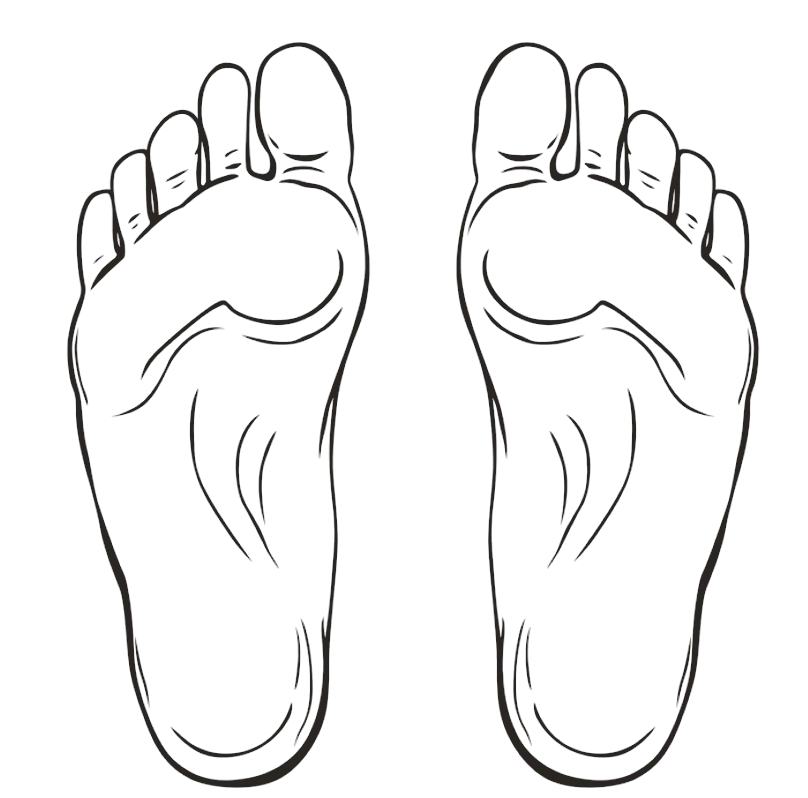
Anatomical foot outline showing left and right feet, plantar view

Tap a zone on the foot to explore what it connects to.

Choose how you'd like zone information presented — personal insights or clinical detail.

FULL REFERENCE

Every Reflex Zone, Explained

Each zone below appears on the map above. The plain-English description is what a client would be told during a session; the clinical note describes the anatomy and the technique used to work the point. Reflexology is a complementary therapy and does not diagnose, treat, or cure medical conditions.

Nervous System

Head & Brain

If you've been carrying mental weight — overthinking, poor sleep, or that foggy feeling that won't lift — this is where we start. Most clients feel a wave of clarity after focused work here, like someone turned the volume down on the noise.

Clinical detail

The head reflex occupies the entire plantar surface of the hallux (big toe). Practitioners apply systematic thumb-walking across the toe pad using the Ingham method, targeting the cerebral cortex, hypothalamus, and pineal gland reflex points. Pressure is typically firm and sustained, working medial to lateral.

Worked during Classic Reflexology Relaxation & Stress Relief

Terms Reflex Points Ingham Method Nervous System Response

Show Head & Brain on the map

Sinuses

Feeling blocked up, heavy-headed, or like you can't quite breathe properly? The smaller toes hold the sinus reflex points. Many clients say they can actually feel their sinuses start to clear during this part of the session.

Clinical detail

The sinus reflexes are located on the plantar and lateral surfaces of toes 2-5. Each toe corresponds to ipsilateral sinus cavities — maxillary, frontal, ethmoid, and sphenoid. Thumb-walking is applied from toe tip to base, with particular attention to the lateral aspects where congestion patterns often present.

Worked during Classic Reflexology

Terms Reflex Points Plantar Surface

Show Sinuses on the map

Eyes

If you spend long hours at a screen or experience eye strain and tired eyes, many clients find that gentle pressure at the base of these toes brings a noticeable sense of relief.

Clinical detail

The reflex points for the eyes are located at the base of toes two and three, where the toes meet the ball of the foot. In reflexology, these points are believed to correspond to visual function.

Worked during Classic Reflexology

Terms Reflex Points

Show Eyes on the map

Ears

Clients who experience occasional dizziness or ear discomfort sometimes find that careful work on these reflex points feels supportive and grounding.

Clinical detail

The ear reflex points are found at the base of toes four and five. These points are associated with both hearing and the vestibular system that governs balance.

Worked during Classic Reflexology

Terms Reflex Points

Show Ears on the map

Solar Plexus

This single point is extraordinary. It sits right in the centre of your foot, and when it's pressed and held, most clients feel an immediate, almost involuntary wave of calm — like your whole nervous system exhales. It's often the point that makes first-timers say 'wow'.

Clinical detail

The solar plexus reflex is a singular point located at the junction of the metatarsal pad and the arch, on the transverse arch line. It corresponds to the coeliac plexus — the largest autonomic nerve centre in the abdomen. Sustained static pressure is held here for seven to ten seconds. Many clients report their breathing slowing and a marked sense of settling during this part of the session.

Worked during Classic Reflexology Relaxation & Stress Relief

Terms Nervous System Response Relaxation Response Reflex Points

Show Solar Plexus on the map

Musculoskeletal

Neck & Throat

If you hold tension in your neck — from desk work, driving, or stress — many clients find this area feels tender at first but releases noticeably as it is worked.

Clinical detail

The crease where the big toe meets the ball of the foot maps to the neck and throat. This narrow band runs across the base of all five toes and is one of the most anatomically precise reflex zones.

Worked during Classic Reflexology Hormone & Fertility Reflexology

Terms Reflex Points Endocrine System

Show Neck & Throat on the map

Shoulder

Clients who carry tension across their shoulders — especially those who sit at desks or carry heavy bags — often find this reflex point particularly satisfying to have worked.

Clinical detail

The shoulder reflex runs along the outer edge of the foot, just below the little toe. This point corresponds to the shoulder joint and the trapezius muscle.

Worked during Classic Reflexology Relaxation & Stress Relief

Terms Reflex Points Zone Therapy

Show Shoulder on the map

Spine

If your back aches — from sitting, standing, carrying children, or just life — the spinal reflex runs the entire inner edge of your foot. Slow, careful work along this line often produces a deep, spreading sense of release that clients feel right through their back.

Clinical detail

The spinal reflex follows the entire medial longitudinal arch, from the hallux (cervical vertebrae C1-C7) through the arch (thoracic T1-T12 and lumbar L1-L5) to the calcaneus (sacrum and coccyx). The curvature of the medial arch mirrors the natural lordotic and kyphotic curves of the spine. Technique involves slow, precise thumb-walking with variable pressure.

Worked during Classic Reflexology Relaxation & Stress Relief

Terms Zone Therapy Reflex Points

Show Spine on the map

Pelvis & Sciatic

The heel holds tension from your lower back, hips, and pelvis. It's often the firmest part of the foot and may need deeper pressure. Many clients with lower back discomfort or hip stiffness find this the most satisfying part of the session — the relief can be remarkable.

Clinical detail

The pelvic reflex encompasses the entire calcaneal (heel) region. The sciatic nerve reflex runs across the plantar heel pad, with the hip joint reflex on the lateral aspect and the sacroiliac joint on the medial aspect. Deep sustained pressure and knuckle techniques are typically required due to the thickness of the plantar fascia in this region.

Worked during Classic Reflexology Relaxation & Stress Relief

Terms Reflex Points Maternity Reflexology

Show Pelvis & Sciatic on the map

Respiratory

Chest & Lungs

This is the part of the session where most clients notice their breathing slow down and deepen. If you carry stress in your chest — that tight, anxious feeling — work across the ball of the foot often releases it in a way that feels genuinely physical.

Clinical detail

The pulmonary reflex zone covers the metatarsal pad (ball of foot), extending from the neck reflex line to the diaphragm line. The bronchial tree reflex runs centrally. Technique involves deep thumb-walking in horizontal strips, working systematically from the medial to lateral border, with sustained pressure at the bronchial bifurcation point.

Worked during Classic Reflexology Relaxation & Stress Relief

Terms Plantar Surface Relaxation Response

Show Chest & Lungs on the map

Heart

Many clients find that when the heart reflex area is worked, they experience a noticeable deepening of relaxation — a feeling of the whole body settling.

Clinical detail

The heart reflex is found on the left foot only, in the upper portion of the ball, slightly towards the inner edge. This placement mirrors the heart's position in the body.

Worked during Classic Reflexology Relaxation & Stress Relief

Terms Reflex Points Relaxation Response

Show Heart on the map

Digestive

Stomach

Many clients with digestive discomfort, nausea, or an unsettled stomach find that reflexology in this area feels genuinely soothing. Parents often note this area is particularly relevant for babies experiencing colic.

Clinical detail

The stomach reflex occupies the upper portion of the arch on the left foot, and a smaller area on the right. Its position corresponds to the stomach's anatomical location in the upper left abdomen.

Worked during Classic Reflexology Baby & Toddler Reflexology

Terms Reflex Points

Show Stomach on the map

Liver

Many clients find that working the liver reflex area supports a general feeling of lightness and improved energy. Those who feel sluggish or heavy may notice this area feels particularly responsive.

Clinical detail

The liver reflex is found only on the right foot, occupying a large area of the upper arch. This reflects the liver's anatomical position on the right side of the body. It is one of the largest single reflex zones.

Worked during Classic Reflexology

Terms Reflex Points

Show Liver on the map

Intestines

Many clients with bloating, irregular digestion, or general abdominal discomfort find that thorough work through the arch brings a noticeable sense of ease and settling in the gut.

Clinical detail

The intestinal reflex zones occupy the central and lower arch of both feet. The small intestine sits centrally, with the large intestine (colon) tracing a rectangular path around it — ascending on the right foot, transverse across both, and descending on the left.

Worked during Classic Reflexology Baby & Toddler Reflexology

Terms Reflex Points

Show Intestines on the map

Endocrine

Adrenal Glands

If you feel constantly on edge, exhausted, or running on adrenaline, many clients find that dedicated work on the adrenal reflex point helps them feel less wired and more grounded.

Clinical detail

The adrenal reflex sits just above the kidney point, in the upper-central area of the arch. The adrenal glands produce cortisol and adrenaline — the body's primary stress hormones.

Worked during Classic Reflexology Hormone & Fertility Reflexology Relaxation & Stress Relief

Terms Endocrine System Nervous System Response

Show Adrenal Glands on the map

Reproductive

If you are navigating hormonal changes — perimenopause, irregular cycles, fertility, or PMS — many clients find targeted work around the heel area genuinely supportive alongside their wider medical care.

Clinical detail

The reproductive reflex points are located around the heel — uterus/prostate on the inner heel, ovaries/testes on the outer heel. These points are key in hormone and fertility reflexology protocols.

Worked during Hormone & Fertility Reflexology

Terms Endocrine System Fertility Reflexology Hormone Reflexology

Show Reproductive on the map

Urinary

Kidneys

Many clients find that after sessions where the kidney reflex is worked, they feel lighter and less puffy — the body's natural fluid balance may feel more settled and comfortable.

Clinical detail

The kidney reflex sits in the centre of the arch, roughly level with the waistline of the body. It is one of the deeper reflex points and reflexologists often use sustained, firm pressure here.

Worked during Classic Reflexology Relaxation & Stress Relief

Terms Reflex Points

Show Kidneys on the map

Bladder

This reflex point is typically worked as part of the urinary system sequence, alongside the kidneys. Many clients don't notice it specifically, but it contributes to the overall sense of the body being supported.

Clinical detail

The bladder reflex is located on the inner edge of the foot, towards the heel, just below the arch. It sits close to the spine reflex, reflecting its anatomical position near the base of the pelvis.

Worked during Classic Reflexology

Terms Reflex Points

Show Bladder on the map
NEXT

Reading a Map Is Not the Same as Being Worked On

The map tells you where the reflex points sit. What a session actually feels like, how firm the pressure is, and what happens in the consultation are all worth knowing before you book.

Book a Treatment From £45 · Free consultation included